Half-Round vs K-Style Gutters in Yalaha: What Homeowners Should Compare
@leafguardguide359
If you own a home in Yalaha, you already know that rain is not a minor housekeeping detail. In this part of Florida, water comes hard, fast, and often sideways. Summer storms can dump a lot of runoff in a short window, and tropical weather adds another layer of stress. That changes the gutter conversation.
A gutter is not just a trim piece tacked onto the roofline. It is part of the way your house handles roof runoff, keeps water moving away from the structure, and stays manageable through long humid months when debris breaks down quickly. Around Central Florida, that debris often means pine needles, oak leaves, acorns, and the organic sludge that forms when all of it sits wet in a channel for too long.
That is why the question in Yalaha is not simply, “Which gutter looks better?” The better question is, “Which gutter shape fits my roof, my maintenance habits, and the kind of storms this house sees?”
Half-round and K-style gutters can both work. The right choice depends less on trend and more on how your home sheds water, how often you want to clean, and whether you are replacing a failing system or building from scratch.
Why Yalaha homeowners need to compare more than appearance
Florida homes deal with conditions that expose weak gutter decisions pretty quickly. Heavy rainy seasons, tropical-storm prep, humidity, and debris buildup all put pressure on the system. University guidance for Florida storm prep specifically recommends clearing needles, leaves, and other debris from roofs and gutters, because clogged drainage paths become a real problem when a storm hits. That matters in Yalaha just as much as it does in nearby communities.
It also matters because gutter overflow is not always just a gutter problem. Once runoff spills where it should not, you can end up with soaked planting beds, muddy splash zones, erosion around the house, and extra strain on whatever drainage setup you have at grade. If organic debris washes out of gutters and into storm drains or waterways, that creates another issue. Florida guidance also points out that leaf litter and yard debris should be kept out of gutters and storm drains, since runoff can carry that material away.
So when people ask me whether half-round or K-style is better, I usually slow the conversation down. Better for what? Better for a historic look? Better for a low-profile fascia line? Better for a home under pines? Better for someone who never wants to think about gutters until one starts sagging in August?
Those are different questions, and the right answer can change from house to house.
The shape is different, and that affects more than curb appeal
Half-round gutters are exactly what they sound like. Their trough has a rounded, open shape, like a tube cut in half. K-style gutters have a more angular profile, with a front face that looks more architectural and boxy from the ground.
That difference shows up visually right away. Half-round tends to read softer and more traditional. On some homes, especially those with a cleaner or more classic exterior, they can look intentional and refined. K-style tends to blend into many common residential rooflines because the face is more structured. That is one reason homeowners around Lake County and surrounding areas often recognize K-style as the familiar default look.
But shape also influences how debris sits inside the gutter and how easy it is to reach during cleaning. In a rounded gutter, wet buildup often has fewer corners to stick in. In a K-style gutter, the profile has more edges and folds, especially toward the front. That does not automatically make one superior. It does mean that maintenance feels different in the hand.
Anyone who has cleaned gutters in a Florida summer knows that “debris” is not always loose leaves. It is often a heavy, damp mat of pine needles, grit, acorns, roof granules, and decomposed organic matter. UF/IFAS guidance on stormwater maintenance specifically notes the need to clean gutters and downspouts as needed and remove organic buildup, especially in summer. In real life, that buildup can turn what looked like a simple cleaning into a muddy excavation.
What roof runoff volume means in practice
When homeowners compare gutter styles, they often jump straight to shape and skip sizing. That is a mistake in Florida.
The more important question is whether the system, gutter and downspouts together, is sized for the house and installed to move runoff where it needs to go. Florida code materials make clear that gutters and downspouts must be sized and discharged in accordance with the applicable code requirements. They also need to be securely fastened with corrosion-resistant fasteners and made of approved materials such as metal or approved plastic.
That means style alone does not solve a drainage problem. A beautiful gutter with undersized downspouts, poor discharge planning, or neglected clogs can still fail when a major storm rolls through.
This is where conversations about gutter sizes for Florida homes become more useful than style debates. A home with broad roof planes and concentrated valleys asks more of a gutter system than a modest roof with simpler runoff patterns. A house shaded by large oaks may need more attention to debris management. A home under pines may need careful thought about gutter guards for pine needles Florida conditions, because some guard setups still allow fine material to accumulate.
In other words, if you are choosing between half-round and K-style without talking about system size, downspout count, and discharge paths, you are not really making the full decision yet.
Half-round gutters, where they shine and where they ask more of you
Half-round gutters usually appeal to homeowners who care about appearance and clean lines. They can look especially good on homes where the roof edge is a design feature rather than something you want to visually hide. If the house has a softer architectural style, half-round often feels less bulky.
From a maintenance standpoint, some homeowners like the simpler interior shape. When you scoop out wet debris, a smooth curve can be easier to rinse and inspect than a more angular profile. That matters when you are dealing with routine gutter cleaning Fruitland Park FL type conditions across this region, where debris is not seasonal in the same tidy way it might be elsewhere. In Florida, the mess tends to rotate. Pine needles drop. Oaks shed leaves and acorns. Storms break twigs loose. Humidity turns everything mushy.
The trade-off is that half-round gutters can look more exposed. Some people love that. Others feel they stand out too much. If your priority is having the gutter visually disappear into the roofline, half-round may not be your favorite choice.
Another practical point is compatibility with the rest of the system. If you are replacing only part of an existing setup rather than doing a full gutter replacement Gainesville FL style overhaul, you need to think about how the new sections, hangers, and downspout connections will integrate. Mixed systems can work in some cases, but partial fixes often create awkward transitions if the original design was different.
K-style gutters, why they are common and what to watch for
K-style gutters are familiar for a reason. They suit a wide range of homes and give a more conventional residential look. In neighborhoods where many homes already use them, they tend to blend in naturally. That can matter more than people expect, especially if you are making upgrades and want the result to look original to the house.
The more structured front profile can also make the gutter read as part of the fascia line rather than as a separate rounded element. For homeowners who prefer a less noticeable system, that is a strong point in K-style’s favor.
Maintenance, though, deserves an honest look. In my experience, K-style gutters can be a little fussier to clean thoroughly once organic material starts packing into corners. Not impossible, just fussier. If your property has a lot of pine needles or oak debris, that detail matters. The issue is not only whether debris gets in, because in Florida it will. The issue is whether you will keep up with it before the next hard rain.
That is also where seamless gutters Ocala FL and nearby market conversations enter the picture. Homeowners often hear “seamless” and assume the shape matters less. Seamless construction can reduce certain trouble spots compared with systems that have more joints, but it does not eliminate the need for cleaning, proper sizing, or sound downspout planning. Style and construction method are related decisions, not identical ones.
Material matters too, even when the style gets all the attention
A lot of homeowners start by asking about profile and end up making the final call based on material and maintenance. That is understandable. In this region, aluminum gutters Central Florida homeowners choose are common in conversation because metal gutters are an approved category under code, and metal systems are widely discussed in residential work.
The material decision ties back to fastening and check it out durability. Florida code language highlights the need for secure attachment using corrosion-resistant fasteners. That may not sound exciting, but it is where good-looking installations either hold up or start loosening over time. Storm-ready gutters Florida homes rely on are not just about the visible channel. They are about the whole assembly working together when weather gets rough.
A clean profile with weak attachment is not much of a gutter system.
The debris question changes everything in Florida
If your lot has pines, live oaks, or both, the best gutter style on paper may not be the best gutter for your life. Florida guidance repeatedly emphasizes keeping leaves, needles, and yard debris out of gutters and storm drains. That is not merely aesthetic advice. It is maintenance advice and storm-prep advice at the same time.
Pine needles create a special kind of frustration. They tangle, mat together, and often slide into downspout openings at the worst time. Oak leaves and acorns add bulk and can break down into a dense, wet layer that slows drainage. During long humid stretches, buildup does not just sit there neatly. It changes texture. It compacts, stains, and starts acting less like loose debris and more like soggy compost.
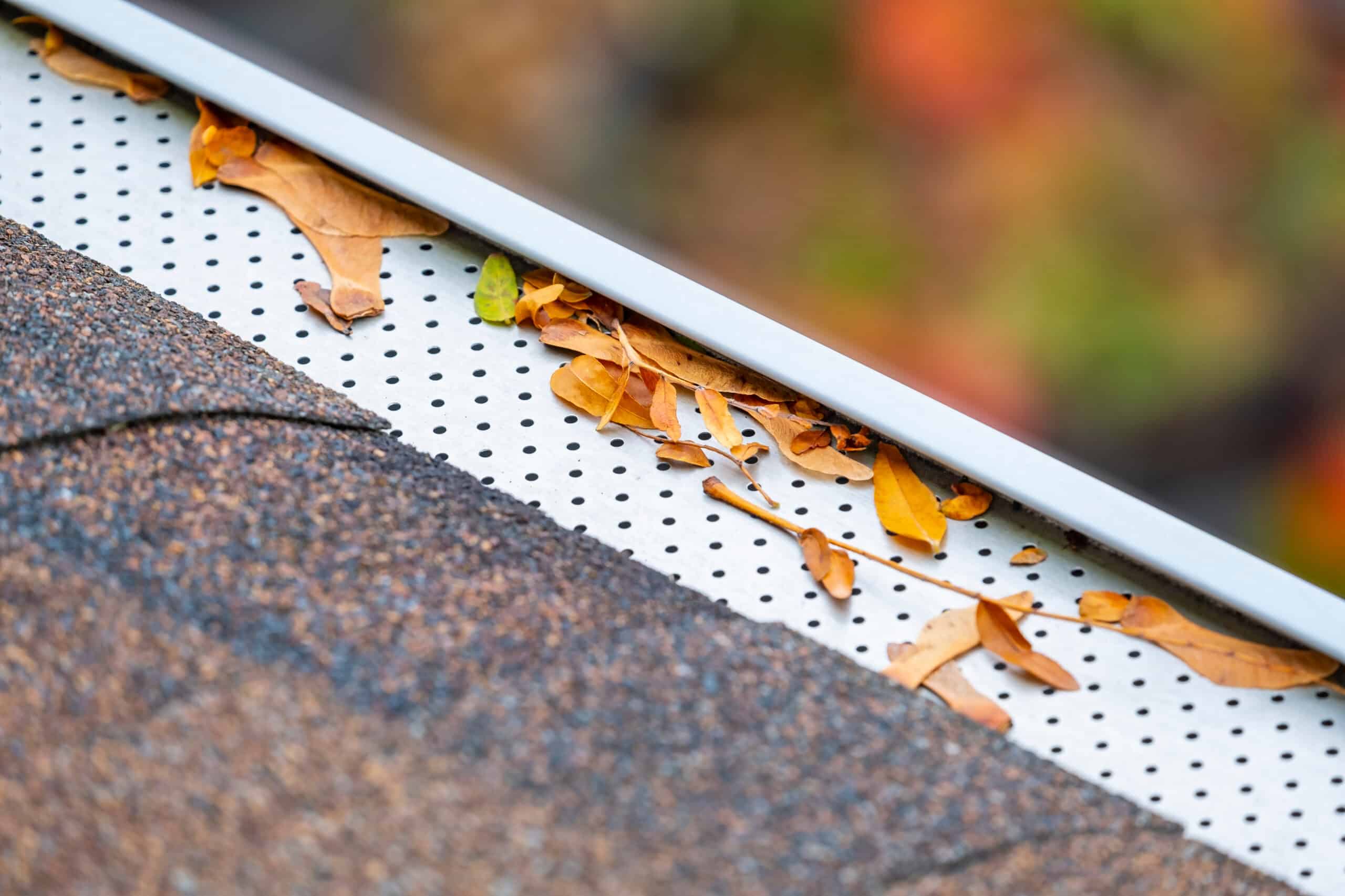
That is why homeowners ask about gutter guards for pine needles Florida properties so often. Guards can help in some cases, but they are not a magic shield. Fine debris still needs attention, and any product should be evaluated in terms of what actually falls on your roof. A guard that handles broad leaves may behave differently with long needles and gritty roof runoff.
If you hate maintenance and your yard produces constant debris, your decision should prioritize cleanout access and realistic upkeep, not just the showroom look.
Downspouts deserve more attention than they usually get
A gutter only works as well as its discharge path. Homeowners can spend hours comparing profiles and colors, then barely discuss downspout drainage Newberry FL style concerns that actually determine where roof water ends up.
That is backwards.
If downspouts are too few, poorly located, or clogged with organic buildup, the gutter shape will not save the system in a serious storm. What you want is a coordinated path from roof edge to gutter, through the downspout, and away from the house in a controlled way.
When I look at a Florida home, I pay attention to whether runoff will dump near entry walks, soften soil beside the foundation area, or wash mulch and leaf litter toward drains. That last detail matters because Florida guidance notes that leaf litter and yard debris can contribute to stormwater pollution when runoff carries them away. A good gutter setup helps you avoid creating that mess in the first place.
Repair versus replacement, and when style becomes a secondary issue
Sometimes homeowners think they are choosing between half-round and K-style when the real question is whether the current system is worth saving at all. If you are already seeing recurring clogs, loose sections, poor discharge, or signs that water is not being controlled well, style should not be the first topic.
A targeted gutter repair Wildwood FL homeowner might schedule can make sense when the core system is sound and only a section has failed. But if the layout is wrong, the sizing is inadequate, or the system has aged into a patchwork of problems, gutter replacement Gainesville FL conversations become more practical.
That does not mean replacement has to be oversized or fancy. It means the new system should fit the roof, the debris load, and your maintenance habits. Replacing one bad piece in a system that never handled runoff properly to begin with usually turns into repeat service calls later.
What to ask before you decide
Before you commit to either style, it helps to frame the decision around how the house actually behaves in rain and during cleanup.
- How much debris lands on the roof and in the gutters during a typical month, not just after a storm?
- Do you want the gutters to blend into the house or stand out as a design detail?
- Are you prepared for regular cleaning, or are you trying to reduce how difficult that cleaning feels?
- Is the current problem really the gutter profile, or is it poor sizing, bad discharge, or deferred maintenance?
- Will the installer address fastening, downspout placement, and code-compliant discharge, not just the visible gutter run?
Those five questions usually reveal more than a showroom sample ever will.
Choosing for your home in Yalaha, not for someone else’s house online
Yalaha homes do not all sit under the same trees, carry the same rooflines, or see the same maintenance patterns. One homeowner may have a relatively open lot where visual style carries more weight. Another may be battling pine needles every week and need a gutter shape that is easier to keep clear. A third may be focused on storm prep after seeing how quickly a summer downpour can overwhelm neglected gutters.
That is why broad statements like “half-round is better” or “K-style is the standard choice” are not very useful by themselves.
If appearance is your top priority and you are willing to stay on top of maintenance, half-round may be a satisfying fit. If you want a more conventional look that blends with many residential exteriors, K-style may feel more natural. In either case, the style decision should come after, not before, a serious look at sizing, discharge, debris load, and installation quality.
Homeowners searching terms like K-style gutters Lady Lake FL or seamless gutters Ocala FL are often really searching for confidence. They want to know they are picking something that can handle Florida weather without becoming a constant chore. That confidence comes from asking sharper questions, not from assuming one profile wins every time.
The contractor matters as much as the gutter profile
Even the right style can disappoint if the installation is careless. Hiring a gutter contractor Florida homeowners can trust means paying attention to more than price and product samples. You want someone who understands local rain patterns, talks clearly about cleaning access and debris, and addresses how runoff will be discharged, not just where the gutter will be attached.
That conversation should include code-minded basics such as proper sizing, secure fastening, and appropriate materials. It should also include practical habits, like how often the system may need cleaning in a yard with pines or oaks, and whether any guard option makes sense for the debris you actually have.
A good contractor will not pretend that one profile solves every issue. They will look at the roof, the tree cover, and the drainage path on the ground. They will talk honestly about maintenance. And they will explain why a certain setup fits your house, not just why it is easy to sell.
When that happens, the choice between half-round and K-style becomes a lot clearer.

For most Yalaha homeowners, the smartest move is to compare the two styles with Florida weather in mind, then make the final call based on runoff management, debris reality, and installation quality. If you do that, you are far more likely to end up with a system that looks right, works hard, and stays manageable when the next round of summer rain shows up.